
After securing a euro 150 million Credit line for solar energy finance from a German financial institution, State Bank of India is in talks with european Investment Bank for about euro 200 million to fund climate finance. Recently the country's largest lender obtained euro 150 million in green funding from German government-owned KFW on soft terms and a long repayment period. SBI will use funds to finance solar energy projects.
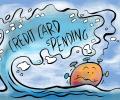
Credit card issuers saw significant erosion of their card base during the July-September quarter as the Reserve Bank of India's (RBI) norms mandated deactivation of cards that have been inactive for a year. The second quarter of the current financial year saw outstanding cards-in-force decline by 2.55 million to 77.7 million. Prior to this, the industry, on an average, was witnessing a net addition of over 1.5 million credit cards a month as players became aggressive on the unsecured lending business after the pandemic.
The outstanding credit card base dropped to 77.99 million in August from over 80 million in July, mainly on account of the new norms of the Reserve Bank of India (RBI) that warrant the deactivation of cards that are inactive for a year. While there was a 2.8 per cent decline in net card additions on a month-on-month (MoM) basis in August, a first in many months, credit card spends slipped 3 per cent on a high base. Still, spends topped the Rs 1-trillion mark for the sixth consecutive month.

Come October 1, merchants, payment aggregators and acquiring banks can no longer store the card details of customers.
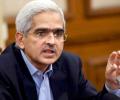
The increasing involvement of Big Tech in the financial system could give rise to concentration risk and there are potential spillovers, which call for closer attention, Reserve Bank of India (RBI) Governor Shaktikanta Das said on Tuesday. "...enormous amounts of consumer data is being generated and leveraged upon by a few entities (the so-called Big Tech) by virtue of their huge customer base. "Such developments raise concerns on concentration risk and potential spillovers as their level of engagement with the financial system strengthens in the years to come," Das said at the Global Fintech Fest 2022.

To educate customers on the modus operandi of financial fraudsters and share inputs on safe banking habits, banks are now coming up with awareness campaigns aimed at preventing customers from falling into the trap of fraudsters.
Credit card spends touched an all-time high of Rs 1.16 trillion in July, registering a growth of 6.5 per cent on a month-on-month basis and 54 per cent year-on-year, latest data put out by the Reserve Bank of India revealed. Spends have topped the Rs 1 trillion level for five consecutive months now. Industry participants are expecting further tailwinds in credit card spends with the onset of the festive season, where spends typically remain at an elevated level.

Commemorating 75 years of India's independence, SBI has launched a 75-day Utsav Deposit Scheme, offering 6.10 per cent for fixed deposits. Senior citizens will get an additional 0.50 per cent and the offer is on until October 30, SBI said.

The Reserve Bank of India has on Wednesday lifted the ban on new customer acquisition by American Express which was imposed with effect from May 2021 due to non-compliance with local data storage norms. "In view of the satisfactory compliance demonstrated by American Express Banking Corp. with the Reserve Bank of India (RBI) circular dated April 6, 2018, on Storage of Payment System Data, the restrictions imposed, vide order dated April 23, 2021, on onboarding of new domestic customers have been lifted with immediate effect," RBI said. Similar bans were imposed on Diners Club International and Mastercard previously.

Outward remittances under the Reserve Bank of India's (RBI's) liberalised remittance scheme (LRS) made a strong comeback in the first quarter of FY23 as Indians increased spending on international travel, maintenance of close relatives, and gifts. The latest data for Q1FY23 released by the RBI shows that remittance by Indians under the scheme jumped 64.75 per cent to over $6.04 billion from $3.67 billion in Q1FY22. The amount remitted in Q1FY23 is even higher than that in Q4FY22, where outward remittance under LRS was to the tune of $5.8 billion. In April, about $2.02 billion was remitted, followed by $2.03 billion in May, and $1.98 billion in June, data released by RBI in the August bulletin shows.

A gradual approach to privatise public sector banks (PSBs) is more ideal than taking a big-bang approach, a study by Reserve Bank of India (RBI) staff has concluded. It has backed the government's idea to privatise two PSBs initially. Such a gradual approach would ensure that large-scale privatisation does not create a void in fulfilling important social objectives of financial inclusion and monetary transmission, the study has argued.
Credit card spends in June, although down marginally month-on-month (MoM), remained above the Rs 1-trillion mark for the fourth consecutive month. In June, credit card spends topped Rs 1.09 trillion, down 4.34 per cent MoM, revealed the data released by the Reserve Bank of India (RBI). However, on a year-on-year basis, spends were up 73 per cent. In May, credit card spends hit an all-time high, reaching Rs 1.14 trillion.

Unified Payments Interface (UPI) clocked over 6 billion transactions in July: the highest ever by India's flagship digital payments platform since its inception in 2016. UPI reported 6.28 billion transactions amounting to Rs 10.62 trillion, according to data released by the National Payments Corporation of India (NPCI), which operates the platform. Month-on-month, the volume of transactions was up 7.16 per cent and value increased 4.76 per cent.
The Reserve Bank of India (RBI) has relaxed card-on-file data storage norms pertaining to guest transactions checkout, whereby now, apart from the card issuer and the card network, the merchant or its payment aggregator involved in the settlement of the transactions can save the data for a maximum of T+4 days or till the settlement date, whichever is earlier. And, acquiring banks have been permitted to store the card-on-file data until January 2023 for handing other post-transactions activities. The industry reached out to the RBI on the issue and sought a solution.
The money sent home by Indians from West Asian countries took a beating in 2020-21 due to the pandemic. On the other hand, overseas Indians in advanced nations - the United States, United Kingdom and Singapore - emerged as important sources of remittance, according to a Reserve Bank of India (RBI) survey. Indians working in informal sectors in West Asia seem to have been impacted the most due to the lockdowns and subdued crude oil prices as well as slower pace of migration in recent years.

HDFC Bank, the country's largest private-sector lender, lost to competition wholesale loans of around Rs 50,000 crore after it increased interest rates in May, said Chief Financial Officer Srinivasan Vaidyanathan in an analyst call. "There were some customers who were offered lower rates by other market participants. "But we decided not to cut back on our rates," he said while addressing analysts after the announcement of the bank's Q1 earnings.

After the finance minister directed public sector banks to join the account aggregator (AA) ecosystem, 5-6 major ones, including State Bank of India (SBI) and Bank of Baroda are expected to go live by July-end. Sahmati, an industry alliance for the AA ecosystem, has been working with PSU banks to get them onboarded for quite some time now. So far, Union Bank of India and Punjab National Bank (PNB) have gone live on the AA ecosystem. While Union Bank has been live for a while, PNB went live earlier this month.

'We try to pick up stocks early and hold onto them for the long term.' 'We are not someone who buys and sells on a daily basis.'

The depreciation in rupee may pose a problem for students who have taken loans from Indian lenders.
The Reserve Bank of India's (RBI's) recent decision to allow credit cards for payments through the Unified Payments Interface (UPI) is likely to attract a merchant discount rate (MDR), said a top payment industry source. For smaller merchants, a subsidy for MDR could be provided. "With credit card-UPI linkage, UPI will not only be a payment instrument but also a lending platform. "How can banks lend without a commercial model? Also, the government has said MDR will be zero for payment products but not for lending products," the source said, indicating the MDR regime for credit card-linked UPI payments.
